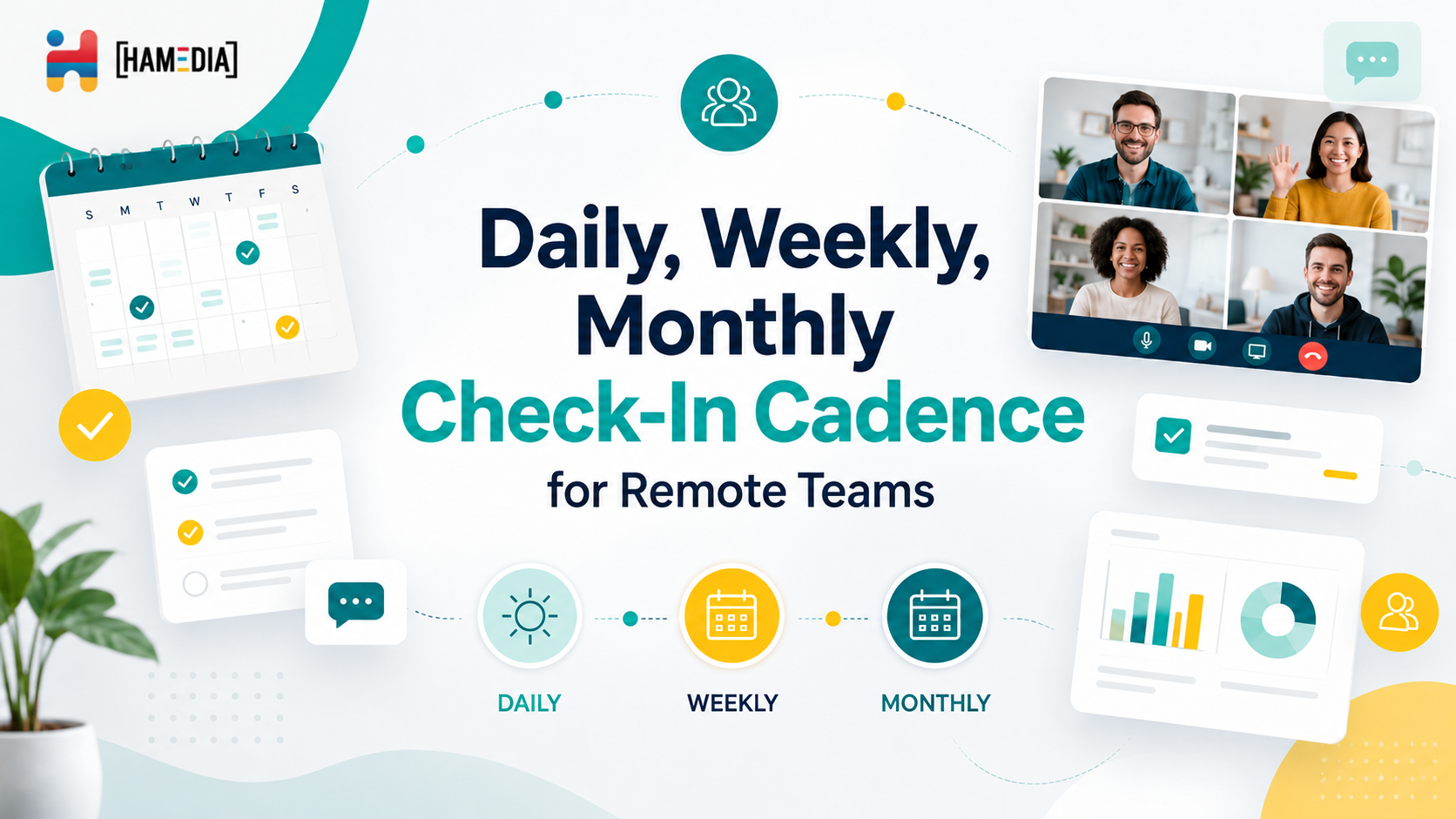
A strong check-in cadence helps remote teams stay aligned without turning every day into nonstop meetings. This blog explains how daily, weekly, and monthly check-ins each serve a different purpose, from surfacing blockers and managing workload to reviewing progress, improving communication, and keeping remote operations organized over time.
Remote teams usually do not struggle because people stop working. They struggle because visibility drops, priorities drift, and small blockers stay hidden too long. A good check-in cadence fixes that. It gives the team a simple rhythm for staying aligned without turning the calendar into a wall of meetings. Management guidance on remote and hybrid teams consistently points to the same basics: clear expectations, frequent coaching conversations, and intentional structure matter more when people are not working side by side.
That is why the goal is not to hold more meetings. The goal is to build the right rhythm. Daily check-ins help the team stay unblocked. Weekly check-ins help the team review priorities and workload. Monthly check-ins help leaders step back, spot patterns, and talk about growth, process, and bigger adjustments. When those three layers work together, remote teams usually feel more stable and easier to manage.
This topic also fits Hamedia Agency naturally. Hamedia’s website positions the company around AI-enhanced outsourcing, structured workflows, operational support, and measurable results, while its approach page explains that support should be built around goals, responsibilities, reporting, and ongoing improvement. That makes cadence design a strong topic for your audience because good remote support depends on clear operating rhythm, not just headcount.
When a team is remote, managers usually get fewer casual signals. They do not overhear a problem in the office, notice someone looking stuck, or catch a quick hallway update. That means remote teams need more intentional structure around priorities, handoffs, and support. Research on remote and hybrid work shows that managers tend to communicate less frequently and less effectively as remote work increases unless they deliberately raise the cadence around priorities, progress, and handoffs. It also shows that proactive check-ins multiple times per week can support stronger engagement in hybrid teams.
A good cadence also prevents two common remote-team problems. The first is silence that hides risk. The second is meeting overload that drains focus. The solution is not constant status calls. It is giving each layer of check-in a clear purpose so daily, weekly, and monthly conversations do different jobs instead of repeating the same update in three different ways. Guidance on meeting cadence and effective meetings makes that point clearly: different meeting frequencies should support different levels of alignment, from short execution check-ins to deeper weekly or monthly conversations.
Daily check-ins are best for fast alignment, not long discussion. This is where the team shares what they are focused on, what changed, and what is blocked. In most remote teams, this works best as a short stand-up, either live or async depending on the team’s workflow and time zones. Stand-up guidance describes these as quick, focused check-ins designed to share updates and identify blockers.
A good daily check-in usually answers only three questions: What am I working on today? What moved since the last update? What is blocking progress? That is enough for most teams. If the update turns into deep problem-solving, it should usually break into a smaller follow-up with only the people who need to be there. That keeps the daily rhythm useful without turning it into a time drain.
For many remote teams, async daily check-ins are often the better choice. A short written update in a shared tool or channel can preserve visibility without interrupting everyone’s workday. Live daily stand-ups make more sense when the work is tightly connected, the pace is fast, or blockers need immediate visibility. The right format depends on how interdependent the work is, but the purpose stays the same: surface blockers early and keep priorities visible.
Weekly check-ins are where the team should do the deeper operational work. This is the right place to review what got done, what slipped, what matters next, and where workload or coordination needs to change. Guidance on meeting cadence suggests weekly meetings create space for deeper discussion than daily check-ins, including reviewing completed work, aligning priorities for the coming week, and addressing emerging challenges.
This weekly layer is usually where managers start seeing the real health of the team. Are the same blockers showing up again? Is one person overloaded? Are deadlines starting to drift? Is cross-functional communication working? Weekly conversations help answer those questions before they become bigger problems. Guidance on workload management also recommends regular one-on-one check-ins as a way to spot overload early and rebalance work before deadlines are missed.
A strong weekly team check-in usually includes four things: wins from the last week, current priorities, blockers or risks, and next-week focus. That keeps the meeting practical. It also helps the team connect daily execution with the bigger weekly picture instead of treating work as one long stream of disconnected tasks.
A lot of remote teams confuse team check-ins with manager check-ins. They are not the same. Team check-ins keep work aligned. One-on-ones help the manager understand workload, growth, concerns, feedback, and role clarity at the individual level. Guidance on one-on-ones says regular check-ins stop larger issues from festering, allow for immediate feedback, and promote open communication. It also notes that weekly or biweekly meetings work well for most team members, while monthly check-ins may suit more experienced employees in some situations.
That means most remote teams should not rely on a monthly one-on-one as the main manager touchpoint, especially for newer team members or fast-changing roles. Weekly or biweekly one-on-ones usually create a better rhythm because they give enough space to talk about priorities, obstacles, and development before issues sit too long. Monthly one-on-ones may still work for highly independent senior staff, but they are rarely enough for everyone.
If your business needs help keeping recurring admin tasks, inbox flow, scheduling, CRM updates, and follow-up support organized inside that weekly rhythm, this is a natural place to point readers toward Hamedia’s virtual assistant page. If you need reliable operational support that plugs into your team’s weekly workflow, check this page.
Monthly check-ins should not feel like a longer weekly meeting. Their purpose is different. Monthly reviews are the place to step back and look at patterns. What keeps slowing the team down? What is changing in workload? Which goals are moving? Where is process friction building? What should change next month? This is the layer where managers stop looking only at today’s execution and start looking at the health of the system.
Progress-check guidance also shows that regular progress conversations matter to expectation clarity and performance. Monthly check-ins are a strong place to review goals, look at trends, celebrate wins, and make process adjustments that are too broad for daily or weekly conversations. They also create a natural place for recognition, which matters more in remote teams because people have fewer visible moments of appreciation in the normal workday.
A monthly check-in can also include simple questions like these: What is working well? What is getting heavier? What keeps repeating? What should we stop doing? What support does the team need next month? Those questions help turn the meeting into an improvement conversation instead of a longer status update.
For many remote teams, a strong baseline looks like this: a short daily async or live stand-up for blockers and focus, a weekly team check-in for priorities and workload, a weekly or biweekly one-on-one between manager and team member, and a monthly team review for trends, process, and goals. That structure gives the team enough visibility without forcing every issue into the same kind of meeting. It also matches the general direction of current guidance on remote management, stand-ups, one-on-ones, and team meeting cadence.
That said, cadence should follow team reality. A fast-moving support team may need live daily check-ins. A more independent content or project team may do better with async daily updates and a stronger weekly planning meeting. A senior specialist may be fine with biweekly or monthly one-on-ones, while a new hire may need weekly manager touchpoints. The point is not to force one schedule onto everyone. The point is to give each layer a clear reason to exist.
The first thing to avoid is using the same meeting to do everything. Daily meetings should not become weekly planning sessions. Weekly meetings should not become monthly performance reviews. Monthly reviews should not turn into a replay of the last five stand-ups. Clear purpose is what keeps cadence useful.
The second thing to avoid is making every check-in synchronous when it does not need to be. Remote teams often work better when short status updates are handled asynchronously and live time is reserved for decisions, coaching, blockers, and discussion. The third thing to avoid is treating cadence as fixed forever. Good teams adjust rhythm as headcount, workload, and role maturity change.
If your business is managing remote support, customer communication, or ongoing issue handling across multiple time zones and channels, this is also a natural place to point readers toward Hamedia’s technical support or omnichannel support pages. Those services fit especially well when cadence, visibility, and structured communication matter.
A good remote-team cadence is not about adding meetings for the sake of looking organized. It is about giving the team the right rhythm for execution, support, and improvement. Daily check-ins keep work moving. Weekly check-ins keep the team aligned. Monthly check-ins keep the system healthy. When those layers are clear, remote teams usually become easier to lead and less likely to drift into silence, overload, or avoidable confusion.
Valerie Vince Cruz is a thought leader in AI-enhanced outsourcing and business operations. With years of experience helping companies scale efficiently, they share insights on the latest trends and best practices in the industry.
Get in touch with our team and we'll help you find the right solution.

Real estate teams grow faster when agents can stay focused on sales while the operational work stays organized behind the scenes. This blog explains how outsourcing lead management, listing operations, and admin support can help reduce missed follow-ups, improve workflow consistency, and create a smoother client experience without adding more internal pressure.

A remote team scorecard helps you measure performance with more clarity and less guesswork. This blog explains how to build role-based KPIs for virtual assistants, technical support, sales, marketing, operations, and managers so you can track output, quality, responsiveness, and results in a way that actually supports remote team growth.

Protecting remote teams does not have to be complicated. This blog breaks down a simple data protection policy businesses can implement to secure devices, manage access, reduce human error, and protect sensitive information across remote workflows. It also covers practical steps for stronger passwords, safer file sharing, phishing awareness, and better support systems for distributed teams.