
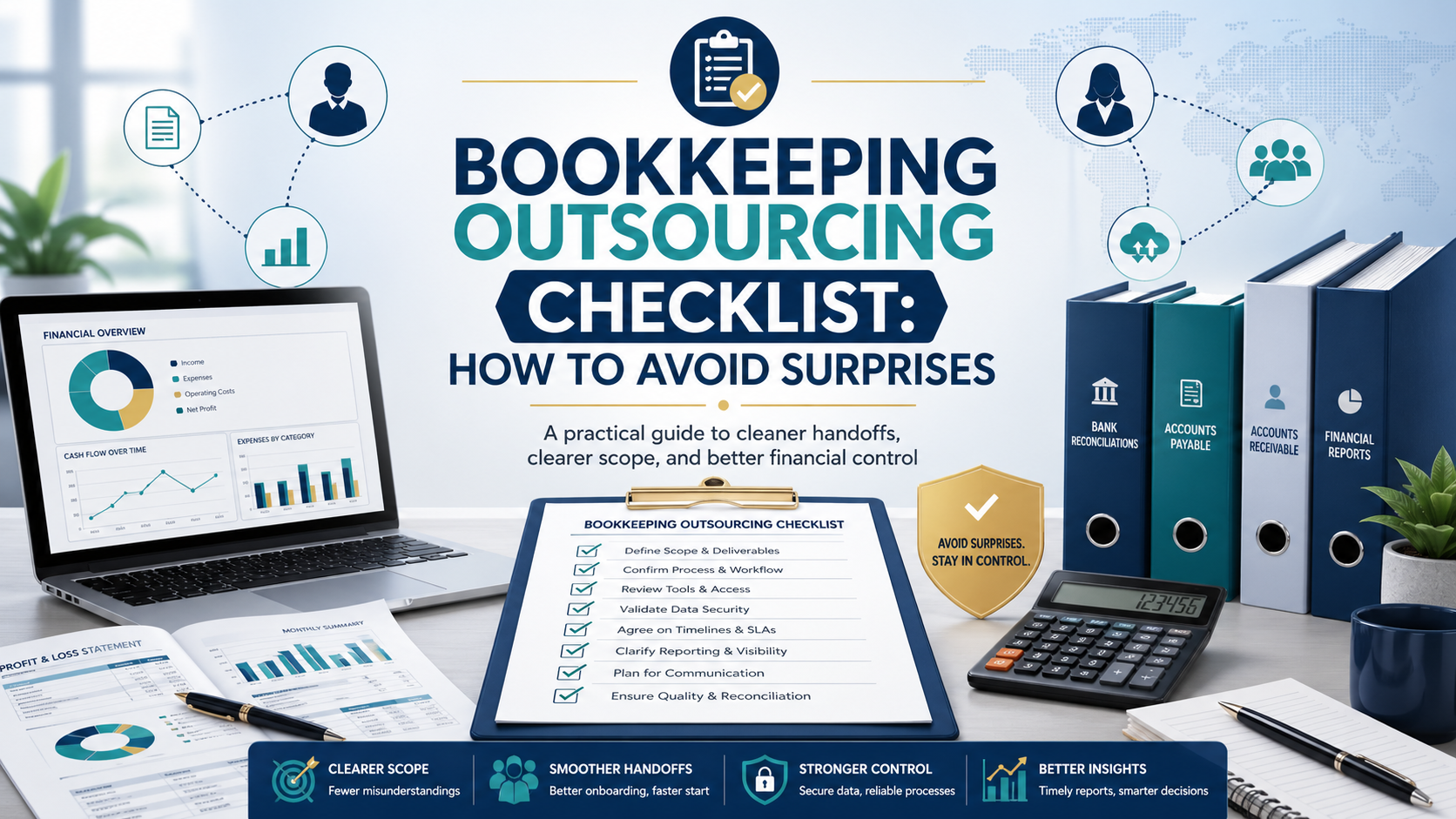
Outsourcing bookkeeping can save time and improve financial visibility, but only when the setup is clear from the start. This blog breaks down a practical checklist to help businesses avoid common surprises by defining scope, cleaning up records, setting reporting expectations, protecting access, and building stronger controls before handing the work off.
Outsourcing bookkeeping can save time, reduce internal pressure, and give a business more financial visibility, but only if the setup is done properly. Most surprises do not happen because outsourcing is a bad idea. They happen because the scope is unclear, the process is weak, the records are messy, or too much trust is placed in one person without enough control. Good financial guidance for small businesses consistently points to the same basics: keep clean records, separate business and personal finances, and make sure your systems stay organized enough to support reporting and taxes.
That is why a bookkeeping outsourcing checklist matters. It helps you prevent the most common problems before they become expensive. Instead of waiting to discover missing receipts, unclear reconciliations, delayed reports, access confusion, or hidden fees, you can set the structure early. Guidance on outsourced bookkeeping generally emphasizes clear expectations, software fit, communication routines, and security as the things that make the relationship work.
This topic also fits Hamedia Agency naturally. Hamedia’s homepage lists accounting and finance support including bookkeeping, financial reporting, payroll, accounts management, and compliance support, and its approach page explains that work is built around clear roles, workflows, reporting methods, monitoring, and continued improvement. That makes this kind of checklist useful both as an educational blog and as a natural path into your related services.
A lot of bookkeeping relationships start with good intentions and still go sideways. The business owner wants relief. The outside bookkeeper wants to help. But nobody clearly defines who does what, how records are shared, when reconciliations happen, who reviews the reports, or what internal controls stay in place. When that happens, the books may look fine for a while, but eventually questions start showing up. Something does not match. A report is late. A document is missing. A payment trail is unclear.
Another common issue is assuming outsourced bookkeeping means the owner no longer needs to stay involved. That is rarely true. Good recordkeeping guidance makes it clear that businesses still need organized records, supporting documents, and systems that can prove income and deductions when needed. Outsourcing can improve execution, but it does not remove the need for oversight.
The first thing to define is scope. Do not assume “bookkeeping” means the same thing to everyone. Some providers handle transaction categorization, reconciliations, monthly reports, accounts payable, accounts receivable, and payroll support. Others only handle basic data entry and month-end cleanup. If the scope is vague, surprises become much more likely because one side assumes something is included and the other side does not.
A clean scope should answer a few simple questions. Which tasks are outsourced? Which tasks stay in house? Who handles bill entry? Who sends invoices? Who reconciles bank and credit card accounts? Who closes the month? Who prepares management reports? Who communicates with the CPA or tax preparer? The more clearly those lines are drawn, the fewer surprises you will have later.
One of the fastest ways to create a bad outsourcing experience is to hand over disorganized records and expect the outside team to fix everything instantly. Clean books start with clean inputs. Tax and small-business guidance consistently stress the need to keep supporting documents for purchases, sales, payroll, and other transactions, and to maintain a recordkeeping system that captures business activity clearly.
Before outsourcing, it helps to clean up the basics. Make sure bank accounts and credit cards are known, login access is documented, open questions are listed, receipts and invoices are organized, and prior reconciliations are identified. If old issues exist, call them out early. A surprise cleanup project becomes much harder when it is discovered halfway through the engagement instead of during setup.
This is one of the most important checks on the list. If business and personal spending are mixed together, bookkeeping becomes harder, reporting becomes less reliable, and tax preparation becomes more stressful. Small-business guidance specifically recommends keeping separate bank accounts and maintaining proper bookkeeping so revenue and expenses are easier to track.
If that separation is not already in place, outsourcing bookkeeping will not solve the root problem by itself. It may make the cleanup more organized, but the business still needs cleaner behavior going forward. A good checklist should treat financial separation as a requirement, not a nice extra.
Bookkeeping outsourcing often gets delayed because access was never properly prepared. The outside team may be ready, but the accounting software login is incomplete, the bank feed is broken, receipt systems are scattered, or supporting files are stored in too many places. Good outsourcing guidance usually recommends checking software compatibility before the work begins for exactly this reason.
Your checklist should confirm which accounting platform is being used, who owns the account, who has admin access, how receipts and bills are uploaded, how payroll data is handled, and where financial reports will be reviewed. Even when the bookkeeper handles daily work, the business should still retain appropriate visibility and access.
Many surprises in bookkeeping come from timing, not from fraud or major mistakes. If nobody agrees on when reports are due, when reconciliations are expected, or when questions should be answered, month-end starts slipping. Then decisions get made using incomplete data. Good outsourced bookkeeping guidance usually recommends setting expectations and communication cadences early.
A useful reporting rhythm is simple. Decide how often transactions are reviewed, when reconciliations should be complete, when monthly reports should be delivered, and how exceptions are escalated. That gives both sides a predictable structure and makes it easier to spot problems early instead of months later.
Outsourcing bookkeeping should not mean giving one person total control over financial activity. One of the biggest risks in small-business accounting is weak internal control, especially when the same person can enter transactions, move money, approve payments, and reconcile accounts. Guidance on internal controls consistently highlights segregation of duties as a key way to reduce errors and fraud.
Source URL: https://www.growthforce.com/blog/top-12-bookkeeping-best-practices-for-achieving-business-success
That does not always mean hiring several full-time finance people. In a smaller business, it may simply mean separating approval from recordkeeping, keeping bank access separate from reconciliation, or requiring owner review for certain payments and reports. The checklist should make sure that outsourced bookkeeping improves control instead of weakening it.
Bookkeeping is not only about today’s entries. It is also about what you can prove later. Tax guidance says businesses must keep records as long as needed to support income, deductions, and other tax return items, and it gives timeframes that can stretch longer depending on the situation.
Your checklist should confirm where financial documents are stored, who owns the storage location, how files are named, how backups are handled, and how long records are retained. This is one of those areas that gets ignored when things are going smoothly and suddenly becomes urgent during tax prep, an audit, due diligence review, or a dispute.
Outsourced bookkeeping involves sensitive information. That can include revenue data, payroll details, vendor records, bank information, and customer payment data. Good outsourcing guidance usually treats data security, secure file handling, and controlled access as a core part of the setup, not a side note.
This is also a natural place to reinforce trust through your own site. Hamedia’s privacy policy explains how the company handles personal information, communications, fraud prevention, and service-related data. If a reader is evaluating any outsourced finance or operations support, this is a strong internal page to include.
Bookkeeping always includes exceptions. A transaction is unclear. A charge is missing backup. A vendor credit does not match. A deposit needs explanation. Surprises get worse when the process for handling exceptions is weak. That is why communication rules matter so much in outsourced bookkeeping.
Your checklist should define where questions go, how quickly they should be answered, and what happens if something remains unresolved at month-end. Small unresolved issues often become big reporting problems when nobody owns the escalation path.
One of the most frustrating surprises in outsourced bookkeeping is discovering that the quoted service only covered part of what you expected. Another is getting extra fees for cleanup, integrations, catch-up work, or reporting requests that were never clearly discussed. Good pricing discussions should be very direct about what is included and what is billed separately.
This is another spot where Hamedia has a natural internal path. Its pricing page emphasizes simple, transparent pricing and no hidden fees, which fits well inside a blog built around avoiding surprise
A good bookkeeping relationship should not begin with “send us what you have and we will figure it out.” A better setup starts with onboarding. That means account access, chart-of-accounts review, document flow, communication rules, reporting dates, escalation paths, and success measures. Hamedia’s approach page is useful here because it emphasizes understanding the business, defining roles, establishing workflows, monitoring performance, and improving over time.
That kind of structure matters because bookkeeping is one of those functions where small inconsistencies create bigger downstream issues. A strong onboarding process lowers that risk and makes the working relationship feel more stable from the beginning.
Before you outsource bookkeeping, confirm the following: the scope is written clearly, your records are cleaned up enough to hand off, personal and business expenses are separated, software access is ready, monthly reporting dates are set, internal controls are still in place, document retention is defined, security expectations are clear, exception handling is documented, pricing is transparent, and onboarding is structured. If even a few of those are missing, surprises become much more likely.
If a business needs broader admin support around document collection, workflow follow-up, scheduling, reporting support, or recurring back-office tasks that connect to bookkeeping operations, this is also a natural internal link. If you need reliable
Bookkeeping outsourcing can absolutely make life easier, but it should never feel like a blind handoff. The best results come from clarity, control, clean records, and a setup that makes questions easier to answer instead of harder. If you use a real checklist before the work begins, you dramatically reduce the risk of unpleasant surprises later.
If you want this blog to guide readers toward action, the strongest next internal links are your homepage, approach page, pricing page, privacy policy, and contact page. Those all fit naturally with a topic built around trust, structure, and operational support.
Internal Link URL: https://www.hamediaagency.com/
Internal Link URL: https://www.hamediaagency.com/our-approach
Internal Link URL: https://www.hamediaagency.com/pricing
Internal Link URL: https://www.hamediaagency.com/legal/privacy-policy
Internal Link URL: https://www.hamediaagency.com/contact
Source URL: https://www.hamediaagency.com/
Source URL: https://www.hamediaagency.com/our-approach
Source URL: https://www.hamediaagency.com/pricing
Source URL: https://www.hamediaagency.com/legal/privacy-policy
Source URL: https://www.hamediaagency.com/contact
Valerie Vince Cruz is a thought leader in AI-enhanced outsourcing and business operations. With years of experience helping companies scale efficiently, they share insights on the latest trends and best practices in the industry.
Get in touch with our team and we'll help you find the right solution.
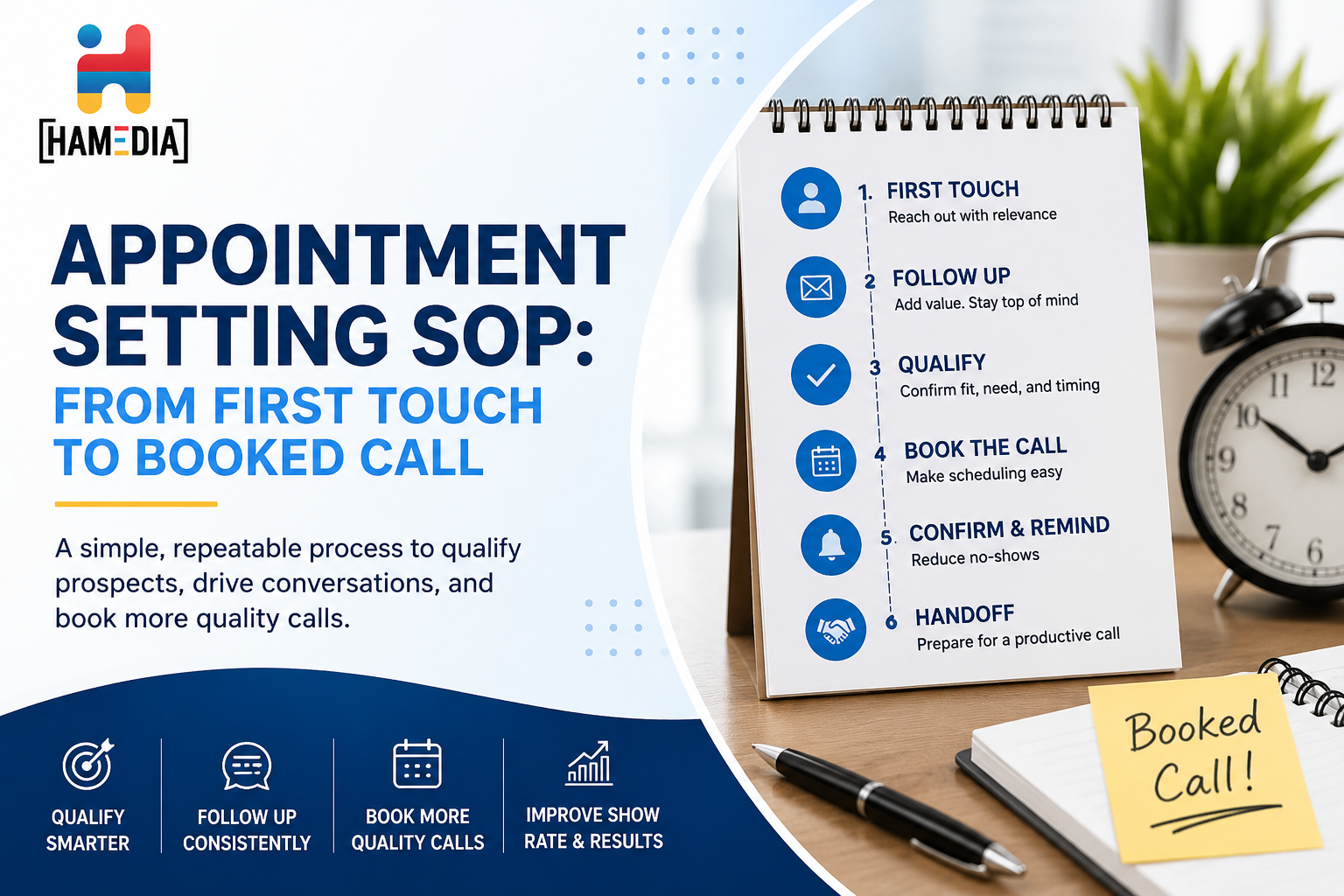
This blog breaks down a simple appointment setting SOP that helps teams move from first touch to booked call with more structure and less guesswork. It covers qualification, follow-up cadence, booking flow, confirmation, reminders, handoff, and no-show handling so businesses can improve meeting quality, protect show rates, and create a more consistent scheduling process.
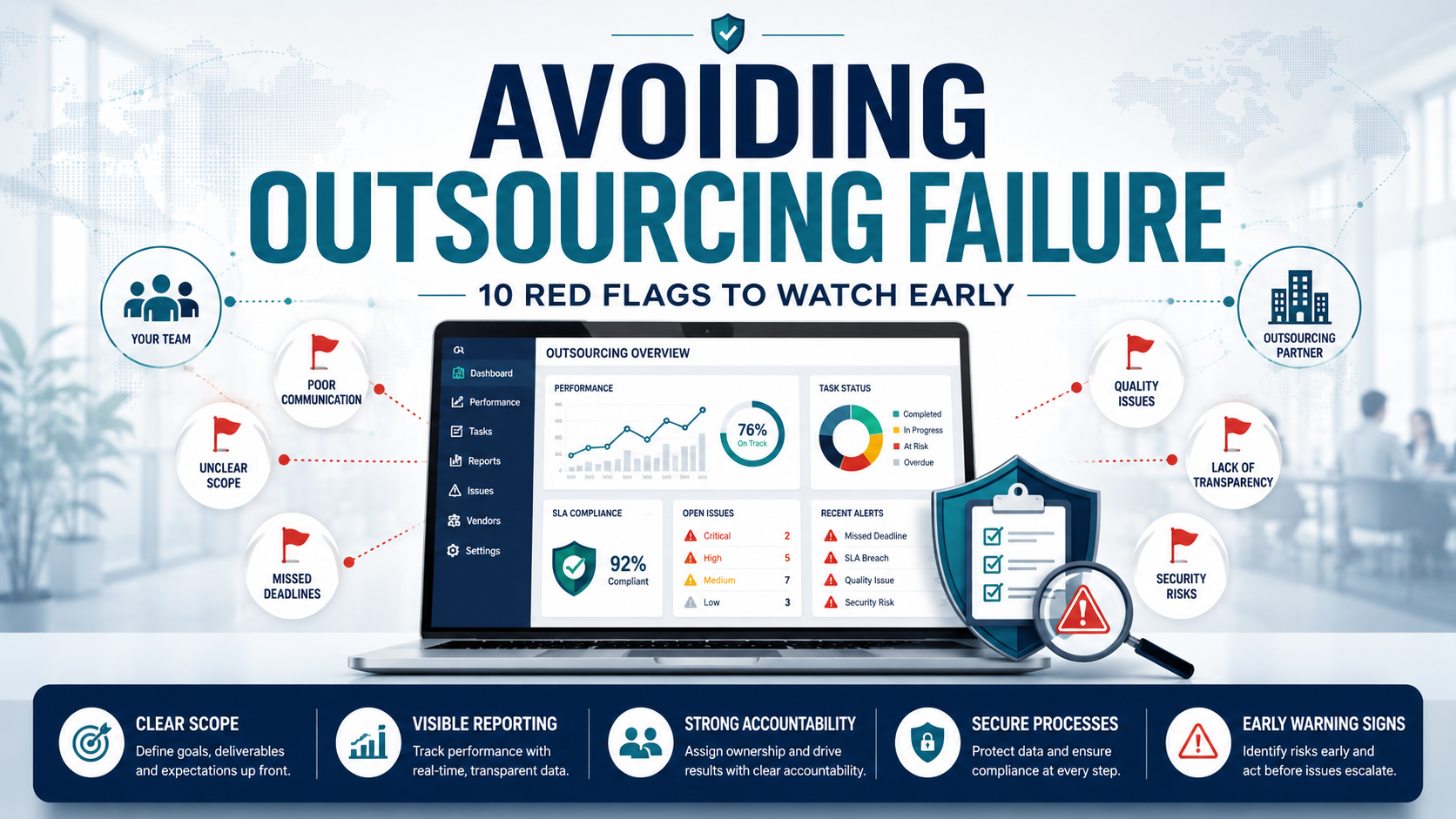
Outsourcing problems rarely begin with one major failure. They usually start with smaller warning signs that are easy to ignore at first. This blog outlines 10 early red flags businesses should watch for, from vague scope and weak communication to poor reporting, repeated rework, and unclear accountability, so teams can spot problems sooner and avoid bigger outsourcing failures later.

Cold outreach works best when the message feels relevant, human, and easy to respond to. This blog breaks down practical messaging frameworks, subject line ideas, follow-up strategies, and real examples that help businesses improve outreach quality, avoid generic copy, and build a more effective cold email process.