
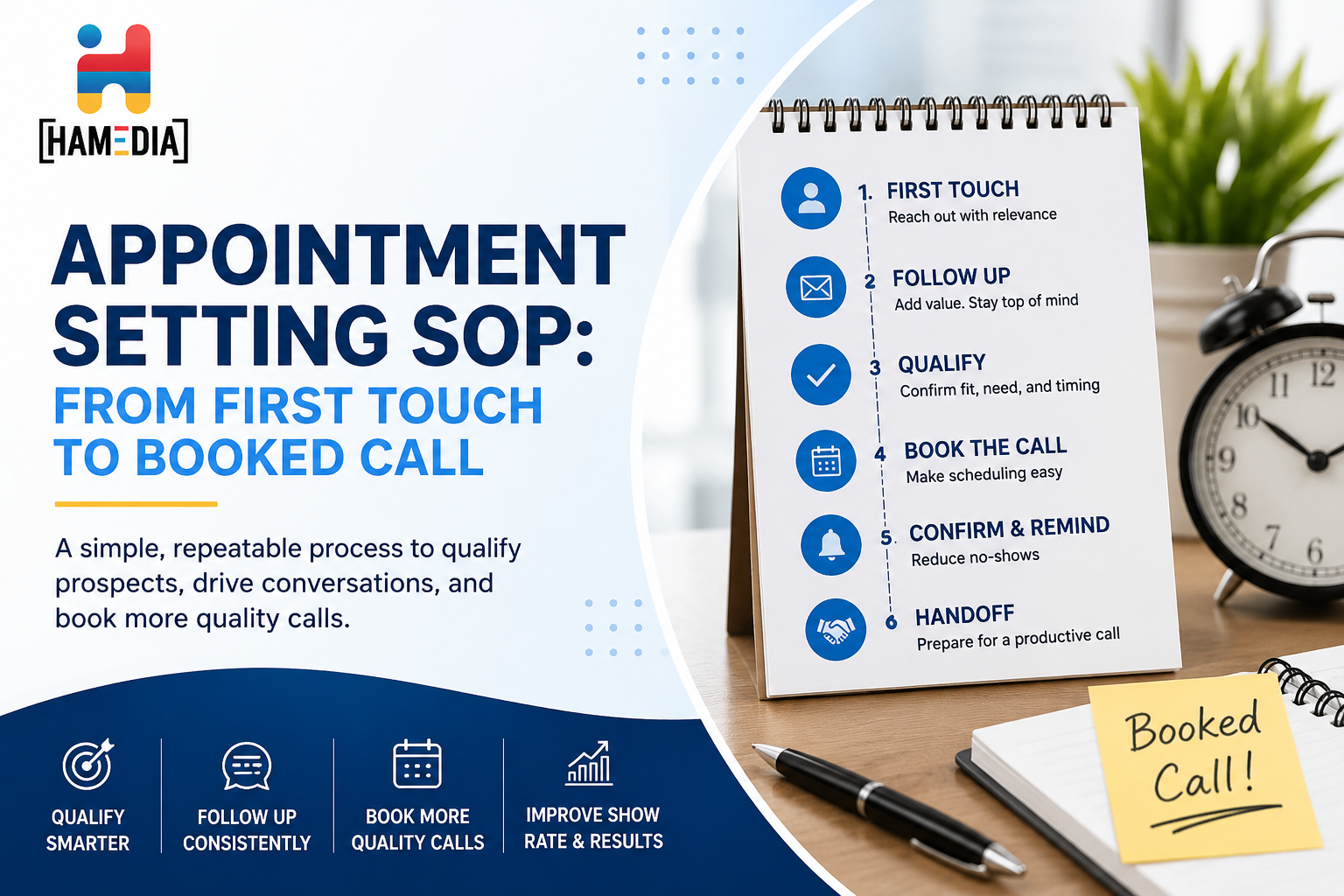
This blog breaks down a simple appointment setting SOP that helps teams move from first touch to booked call with more structure and less guesswork. It covers qualification, follow-up cadence, booking flow, confirmation, reminders, handoff, and no-show handling so businesses can improve meeting quality, protect show rates, and create a more consistent scheduling process.
Appointment setting works best when it is treated like a process, not a random sales activity. A booked call is not just a calendar event. It is the result of the right lead, the right message, the right follow-up, and the right handoff happening in the right order. Current sales guidance describes appointment setting as the structured process of moving a prospect from initial interest into a scheduled meeting, and it also makes clear that this stage protects pipeline quality by filtering for fit, need, and timing before the closer takes over.
That is why an SOP matters. Without one, teams usually rely on memory, personal style, and inconsistent follow-up. One rep qualifies well. Another books too early. One person sends reminders. Another forgets. The result is a calendar full of mixed-quality meetings, lower show rates, and a lot of wasted selling time. Strong appointment-setting systems focus on meeting quality, attendance, and conversion, not just how many calls were booked.
This topic also fits Hamedia Agency naturally. Hamedia’s site positions the company around AI-enhanced outsourcing, workflow support, and trained virtual assistants, while its approach page says support should be built around goals, responsibilities, reporting, and ongoing improvement. That makes appointment setting a strong topic for your audience because the process touches lead response, scheduling, follow-up, admin support, and handoffs all at once.
Before the first message is ever sent, the team should define what kind of prospect is worth booking. This is one of the most important parts of the SOP because a full calendar does not help if the calls are a bad fit. Current sales guidance explains that appointment setting is different from lead generation because it is supposed to convert interest into a scheduled and attended conversation with a qualified prospect. It also points out that poor-quality appointments create longer sales cycles and lower win rates.
A simple qualification gate usually includes role, need, timing, and basic fit. That does not mean the appointment setter has to run a full discovery call. It means they should know enough to avoid booking people who clearly are not a fit. When that line is unclear, appointment setting becomes a volume game instead of a quality process.
The first touch should not try to do everything. Its job is to earn enough interest for the next step, not to cram the entire pitch into one message. Current appointment-setting guidance describes this stage as the bridge between prospecting activity and real pipeline, which means the goal is to move the conversation forward with relevance and clarity, not overwhelm the prospect.
A good first touch is usually short and specific. It should show why the message is relevant, hint at the value of the conversation, and make the next step feel easy. The message can be by email, call, or another channel, but the structure should stay consistent: relevance first, value second, ask third. If the opening message feels generic, the rest of the process gets harder right away.
A lot of appointment-setting SOPs break down because follow-up depends too much on the rep’s mood or memory. Some people follow up once and stop. Others follow up too aggressively. Better sales guidance recommends systematic follow-up because opportunities are often lost to timing and inbox fatigue, not immediate rejection. It also recommends keeping follow-up messages short, adding value, and avoiding lazy lines that sound like pressure instead of help.
A simple SOP can set a clear sequence. For example, first touch on day one, follow-up on day three, another useful touch a few days later, then a final close-the-loop message if there is still no response. The exact cadence can vary, but the important part is that the team does not improvise it differently every time. A system creates consistency, and consistency makes performance easier to improve.
One common mistake is sending a calendar link too early. A booking link is useful, but it works best after the prospect has shown enough interest to justify the meeting. The SOP should make that step clear. If the prospect is warm and ready, move to scheduling. If not, keep the conversation focused on fit and relevance first. Appointment-setting guidance makes it clear that this stage is about turning real interest into scheduled, attended conversations, not pushing every lead straight to the calendar.
This usually means the appointment setter should know how to ask one or two quick qualification questions before sending times. That can be as simple as confirming the prospect’s role, main goal, or timing. It keeps the meeting quality higher and helps the closer walk into a more useful conversation.
If your team needs help handling inboxes, follow-up messages, meeting coordination, and recurring admin work around this part of the process, this is a natural place to point readers toward Hamedia’s virtual assistant page. Hamedia’s service page specifically includes inbox management, calendar scheduling, meeting coordination, customer support, and data handling, which fits appointment-setting support very well.
Once the prospect is ready, the booking step should be easy. Current scheduling guidance recommends capturing qualification details during booking, using routing rules when needed, and reducing back-and-forth by letting the prospect choose from live availability. It also recommends collecting useful details during the booking flow so the right rep gets the right meeting.
This is a strong place for the SOP to specify what happens in the booking form or scheduler. For example, what questions should be asked, how meetings are assigned, what meeting type gets booked, and what happens if the prospect is outside the right territory or segment. A clean booking flow saves time not only for the prospect but also for the team behind the scenes.
The moment a meeting is booked, the confirmation should go out right away. Current scheduling and confirmation guidance both recommend immediate confirmation because it locks in the appointment details, reduces confusion, and gives the prospect a clear record of the meeting time, date, and next step. Confirmation messages also work better when they include clear details and easy actions.
A good confirmation should include the meeting title, date, time, time zone, who they are meeting with, and what the call will cover. If relevant, it should also include a calendar invite and a simple path to reschedule. When confirmation is vague or delayed, no-shows become more likely because the prospect never fully locked the appointment into their day.
Booked meetings are not the final goal. Attended meetings are. That is why reminder steps should be part of the SOP, not an optional extra. Current guidance on scheduling and confirmation recommends sending reminder sequences before the meeting, often with clear time-zone details and a simple way to confirm, cancel, or reschedule. Reminder systems are also described as a practical way to reduce no-shows and reduce manual follow-up work for staff.
A simple appointment-setting SOP can define this very clearly: send confirmation immediately, send a reminder 24 hours before, and send a final reminder about an hour before the call. If the team works across time zones, every message should show the local meeting time clearly. That one detail prevents a surprising number of missed calls.
A strong appointment-setting SOP should not stop at “meeting booked.” The handoff before the call matters too. The closer or account executive should have enough context before the meeting starts. Current sales guidance makes clear that appointment setting protects pipeline quality, which means the information gathered during first touch, follow-up, and qualification should move forward cleanly into the booked call.
That handoff can be simple. The SOP can require a short note with source, qualification notes, stated pain point, timing, and any special context from the conversation. This prevents the closer from walking into the call blind and makes the prospect feel like the team is coordinated instead of disconnected.
No-shows happen, but the response should still be structured. Current no-show guidance recommends staying calm, avoiding guilt, adding value in the follow-up, and proposing an easy reschedule instead of sending a cold or frustrated message. It also recommends being realistic if the same prospect reschedules or misses repeatedly.
That means the SOP should include a no-show follow-up template and timing. For example, send a short message soon after the missed meeting, recap what would have been covered, include any useful resource, and offer a reschedule link. If the prospect misses again and again, the process should define when the opportunity gets deprioritized instead of letting it sit in the pipeline forever.
A practical appointment-setting SOP can be kept very simple. First, define qualification rules. Second, send a relevant first touch. Third, follow up on a set cadence. Fourth, confirm fit before offering time. Fifth, route and book the meeting cleanly. Sixth, send confirmation immediately. Seventh, send reminders before the call. Eighth, hand off context to the closer. Ninth, run a structured no-show process if needed. Current sales and scheduling guidance supports each of these stages as part of a cleaner appointment-setting system.
What makes this work is not complexity. It is consistency. The team should know what happens at each step, what gets tracked, what message goes out next, and when a meeting is truly counted as successful. That helps leadership focus on the right metrics too, especially meetings held, show rate, and downstream conversion, rather than just total bookings.
For teams that already know appointment setting is slipping because inboxes are overloaded, follow-ups are inconsistent, or admin handoffs are weak, Hamedia’s support model fits naturally into this conversation. Its virtual assistant page highlights scheduling, meeting coordination, inbox support, and customer communications, while the contact page says the team offers a response within two hours and provides dedicated account management and custom solution design. That kind of support can help businesses turn appointment setting from a fragile manual process into a more reliable operating rhythm.
Appointment setting works better when the team treats it as a system from first touch to booked call. A good SOP protects meeting quality, improves show rate, reduces admin waste, and gives the closer a stronger starting point. The main idea is simple: define who should be booked, follow up with structure, make scheduling easy, confirm clearly, remind consistently, and hand off the right context before the call starts. When those steps are clear, the calendar becomes more useful and the pipeline becomes healthier.
Valerie Vince Cruz is a thought leader in AI-enhanced outsourcing and business operations. With years of experience helping companies scale efficiently, they share insights on the latest trends and best practices in the industry.
Get in touch with our team and we'll help you find the right solution.
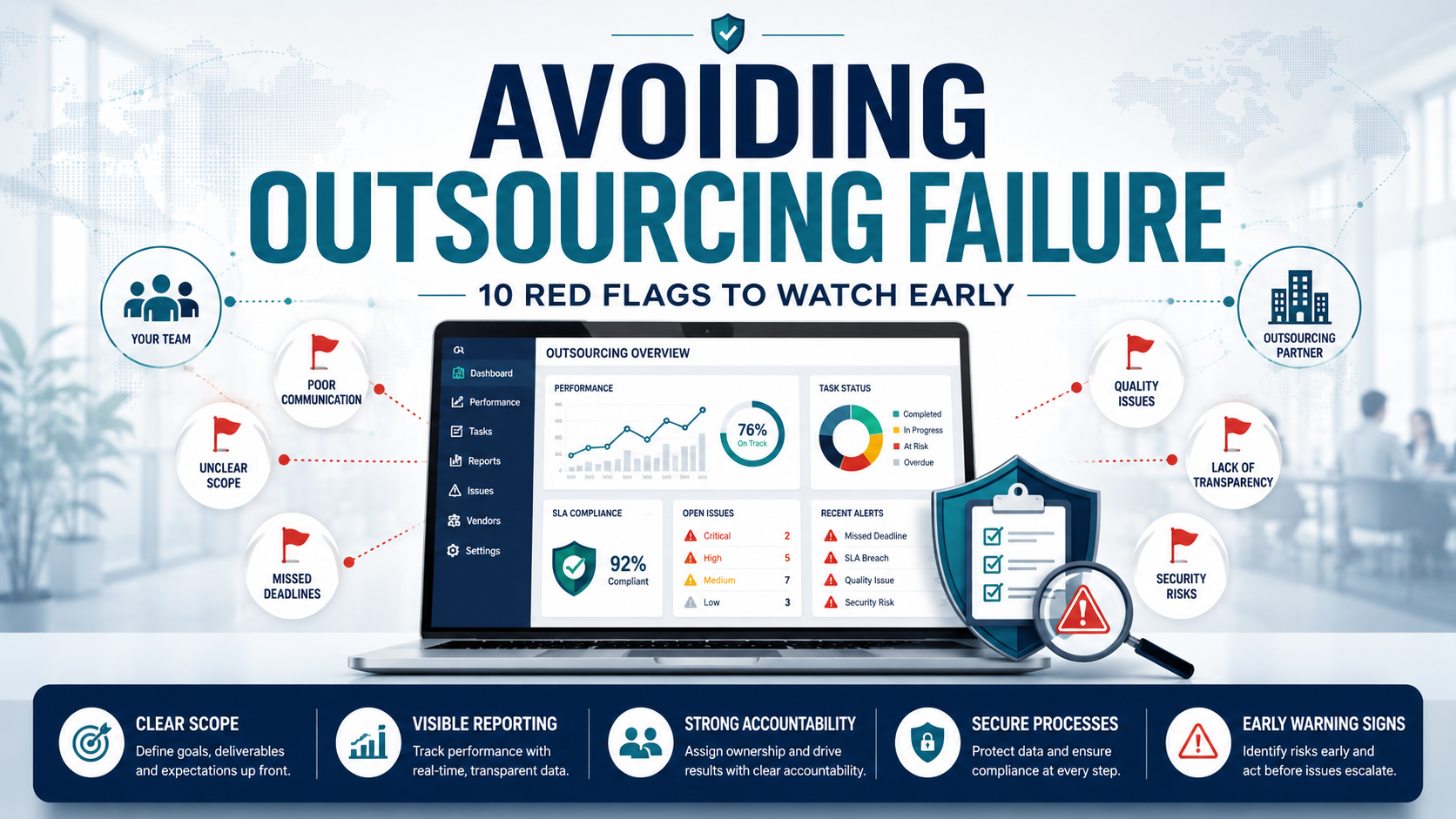
Outsourcing problems rarely begin with one major failure. They usually start with smaller warning signs that are easy to ignore at first. This blog outlines 10 early red flags businesses should watch for, from vague scope and weak communication to poor reporting, repeated rework, and unclear accountability, so teams can spot problems sooner and avoid bigger outsourcing failures later.
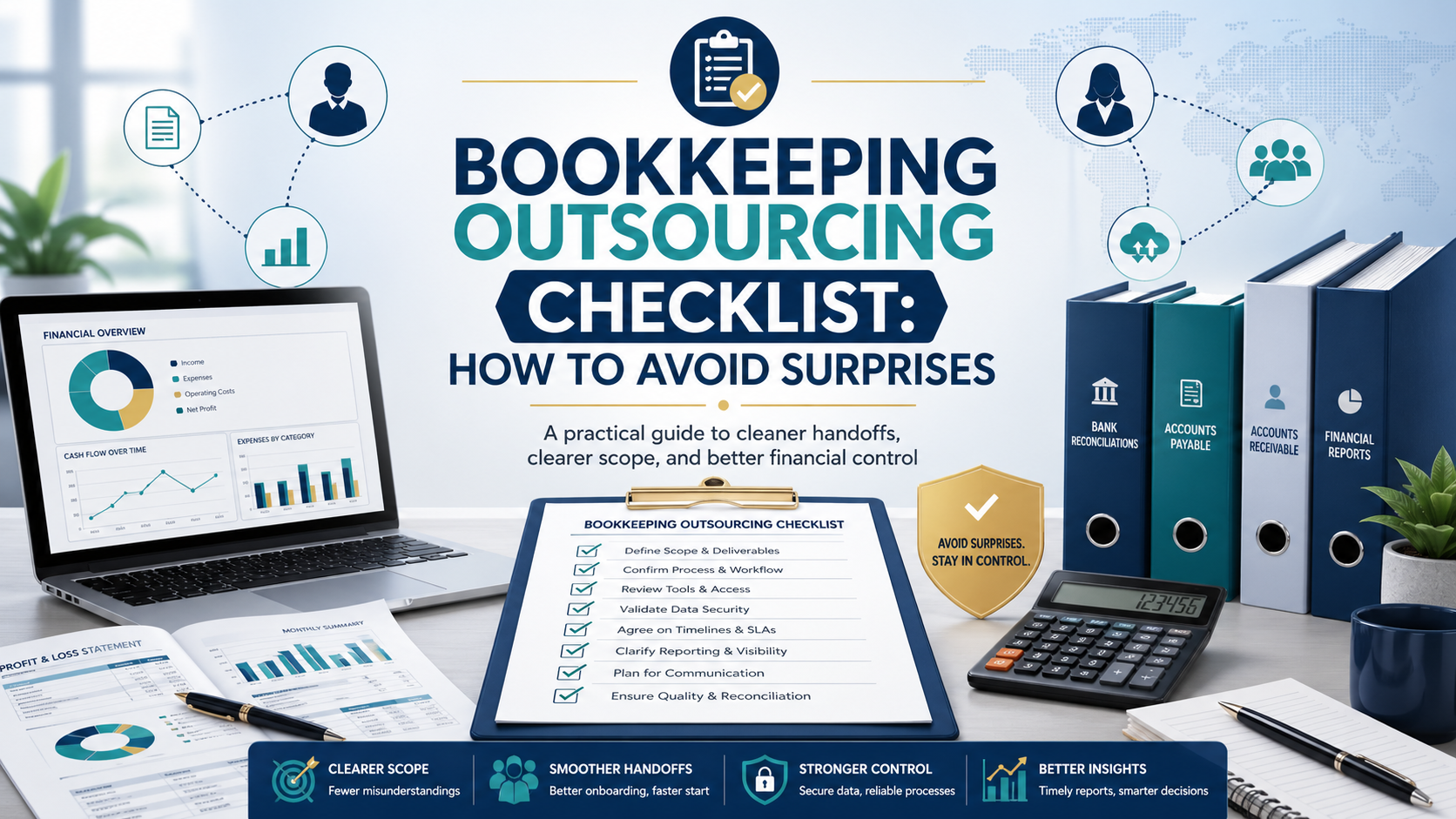
Outsourcing bookkeeping can save time and improve financial visibility, but only when the setup is clear from the start. This blog breaks down a practical checklist to help businesses avoid common surprises by defining scope, cleaning up records, setting reporting expectations, protecting access, and building stronger controls before handing the work off.
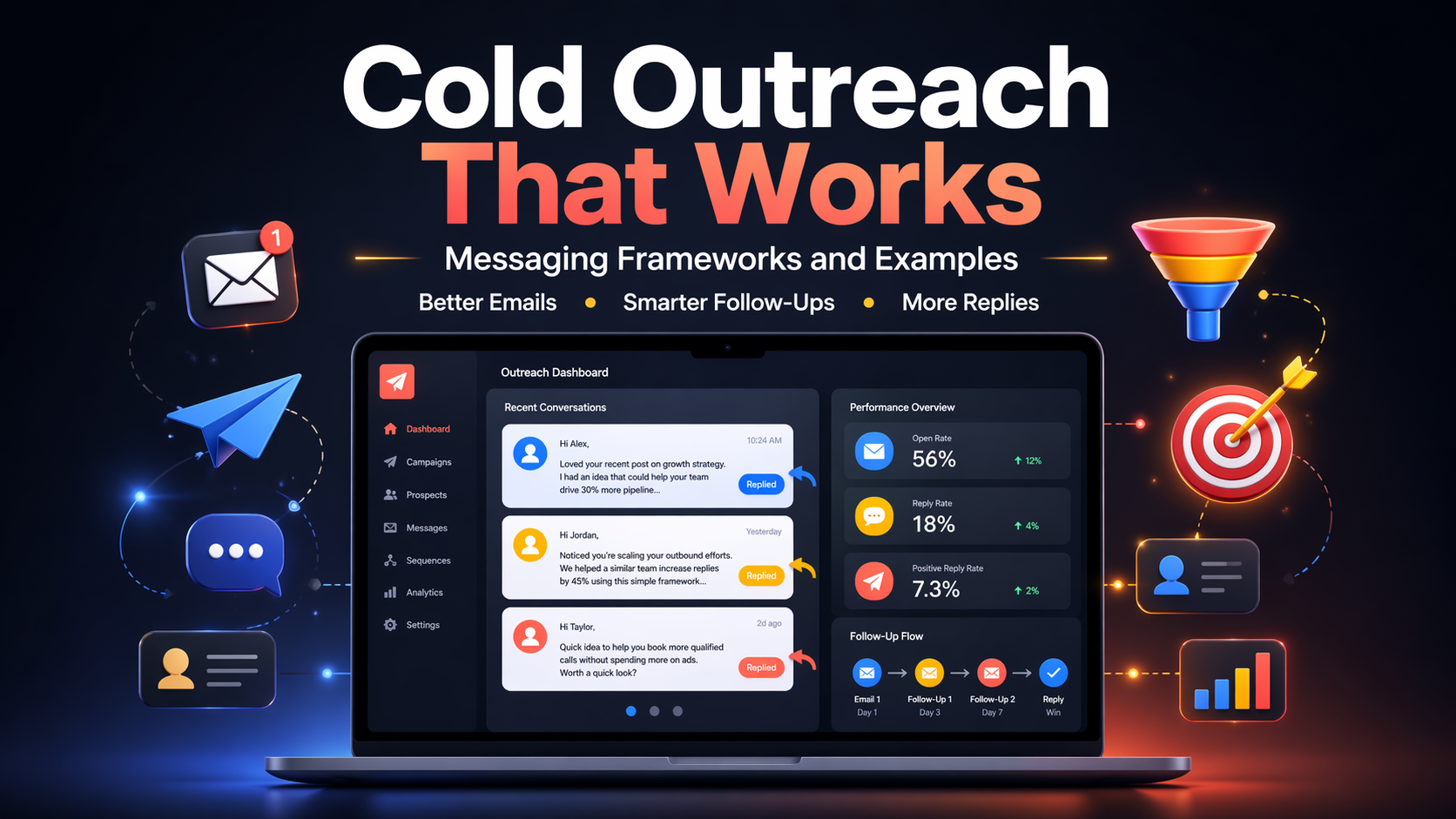
Cold outreach works best when the message feels relevant, human, and easy to respond to. This blog breaks down practical messaging frameworks, subject line ideas, follow-up strategies, and real examples that help businesses improve outreach quality, avoid generic copy, and build a more effective cold email process.