
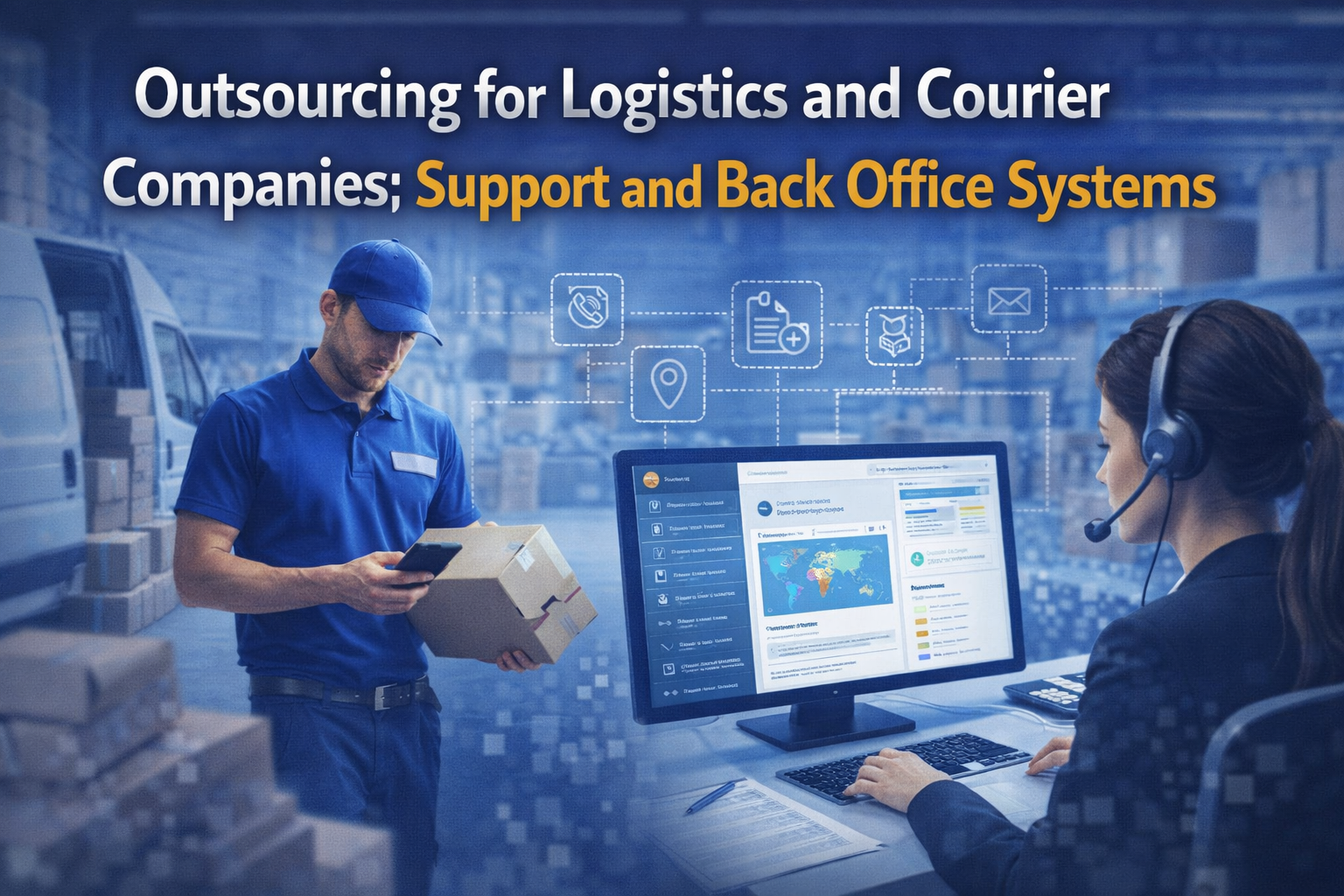
A modern courier operation is more than drivers and vehicles. It is a system of intake, dispatch support, tracking and proof of delivery, exception handling, reporting, billing reconciliation, and customer communication. In this post, you will learn which support and back-office workflows logistics and courier companies can outsource safely, how to set guardrails like escalation rules and approval gates, and how strong POD and chain-of-custody processes improve client trust and retention as routes and stop counts scale.
Logistics and courier businesses scale fast, but the operational workload scales even faster. As stops increase, the hidden load shows up in dispatch overload, exception handling, proof-of-delivery disputes, customer follow-ups, driver onboarding paperwork, and billing reconciliation. Outsourcing works in this industry when it reduces operational drag without removing control from your core ops team.
A modern courier operation is not just drivers and vehicles. It is a system: intake, dispatch, tracking, POD, exceptions, reporting, billing, and customer communication. When those support layers are weak, you feel it as missed pickup windows, angry clients, and churn, even if drivers are doing their best.
Courier companies have a high volume of repeatable workflows that require discipline, not executive judgment. That makes them ideal for outsourcing, especially when you document SOPs and define clear escalation rules.
Outsourcing also protects your internal leadership. Dispatchers and ops managers should be managing exceptions and relationships, not doing constant data entry, chasing signatures, or building daily reports from scratch.
Outsource the first layer of support: logging requests, triaging urgency, opening tickets, and routing issues to the right ops owner. This keeps messages from getting lost when volume spikes.
Many “delivery problems” are really documentation problems. Outsource the workflow of verifying PODs, attaching photos or signatures to records, and prepping evidence packets when clients dispute deliveries. Your internal ops lead can still own the final client response, but the prep work can be outsourced.
Exceptions are where courier companies win or lose trust. Outsource the “exception clock” work: logging the exception, confirming who owns it, sending updates, and ensuring closure documentation is complete. Keep escalation decisions internal.
Outsource shift confirmations, driver callouts documentation, route sheet preparation, and customer ETA update workflows. Your internal dispatcher stays in control, but outsourced support keeps the dispatch board clean and current.
Outsource document collection, checklist verification, training scheduling, uniform policy confirmations, and license or insurance documentation tracking. This speeds up staffing without lowering standards.
Outsource rate sheet application, invoice preparation, POD matching to billing, and AR reminder workflows. Keep anything involving bank detail changes or approvals internal.
Outsource the assembly of daily, weekly, and monthly reporting: on-time rates, exception counts, POD completion, missed scans, and customer complaint themes. Your internal team can interpret and present it, but the build work is repeatable.
Keep internal the decisions that carry high risk, require high context, or affect money movement.
Route and capacity decisions, client escalation decisions, and service recovery commitments should be owned by internal ops leadership because they require tradeoffs and judgment.
Anything tied to payment details, pricing exceptions, refunds, or bank changes should remain internal due to real-world fraud and social engineering risks.
Whether you use a helpdesk or a CRM pipeline, you need one place where issues are logged, owned, and tracked to closure. That is how you prevent “I thought you handled it” failures.
Dispatch needs a standard: every exception has an owner, an update cadence, and a documented closeout. This is the difference between a courier that “delivers” and a courier that clients trust at scale.
If you serve legal, healthcare, or financial clients, chain of custody and verification are not “nice to have.” They are core to the service. Your internal SOPs should define handoffs, verification rules, and how POD evidence is stored.
If you deliver medications or specimens, workflow discipline and documentation become even more important. A clean example of how courier workflow ties to chain-of-custody, tracking, and confirmation is outlined here.
Week 1: outsource intake routing + basic admin relief (ticket logging, follow-ups, schedule confirmations).
Week 2: add POD verification and exception admin support (evidence packets, closure tracking, status updates).
Week 3: add billing prep and weekly KPI reporting assembly.
Week 4: tighten SOPs and quality checks so outsourcing becomes repeatable, not person-dependent.
Outsourcing in logistics often touches customer addresses, delivery records, and client contracts. Use least-privilege access, named accounts, MFA, and clear approval gates for high-risk actions like exports, permission changes, and billing changes.
Here are courier-relevant references you can cite or link to inside your post where they fit:
Real-time tracking and proof of delivery expectations.
Legal chain-of-custody standards for document delivery.
How to evaluate a courier partner operationally (questions to ask).
Pharmacy delivery workflow with scanning, tracking, and confirmation.
Dedicated routes vs on-demand model selection for operations.
Outsourcing for logistics and courier companies works best when it strengthens the support layer around dispatch and delivery: intake, POD, exceptions, reporting, recruiting admin, and billing prep. Keep judgment and high-risk approvals internal, and let outsourced support run repeatable workflows with clear SOPs and measurable KPIs. You can start here.
Valerie Vince Cruz is a thought leader in AI-enhanced outsourcing and business operations. With years of experience helping companies scale efficiently, they share insights on the latest trends and best practices in the industry.
Get in touch with our team and we'll help you find the right solution.

Outsourcing can feel like a true extension of your business when the right operating model is in place. This blog explains how clear processes, shared systems, strong onboarding, role clarity, and AI-supported workflows help outsourced teams work more like in-house support instead of disconnected outside help.
Outsourcing can scale your business fast, but it also increases security risk if access is unmanaged. This guide explains how to outsource securely using least-privilege access, password managers, named accounts, role-based permissions, MFA, approval gates for high-risk actions, and a repeatable offboarding checklist. It also covers AI data rules and audit logging so you can scale with confidence.

Security companies often hit scaling issues in dispatch, admin, recruiting, and client reporting long before they hit guard performance limits. This guide explains what security firms can outsource safely, how to split authority vs execution, which workflows deliver the fastest ROI, and what guardrails like least-privilege access, approval gates, and documented escalation paths keep quality and client trust high.