

Support quality breaks when volume grows and answers become inconsistent. This guide shows how to build a lightweight support QA program in two weeks using a simple scorecard, smart sampling, fast feedback, and weekly coaching. You will also learn how to turn QA trends into better macros, knowledge base updates, and escalation rules so customer experience stays consistent as you scale.
A support QA program is not about “catching agents doing something wrong.” It is about protecting customer experience as volume grows. When QA is missing, small inconsistencies become big problems: tone drifts, answers vary by agent, refunds get handled differently, and escalations rise. The result is more churn, more stress, and less trust.
The good news is you can build a simple, effective QA program in two weeks without buying new software or creating an overly complex process. The goal is consistency, not perfection.
This guide walks you through a practical 14-day setup: what to measure, how to score tickets, how to coach agents, and how to turn recurring issues into better macros and knowledge base updates.
A QA program ensures that every customer interaction meets your standards for accuracy, tone, completeness, and policy compliance. It also creates a feedback loop so support improves over time, not just “works.”
Most importantly, QA gives leadership visibility. Instead of relying on random customer complaints, you get early warning signals through sampled reviews and trend tracking.
A two-week QA program should be built around four pillars:
Clear standards, so everyone knows what “good” looks like.
A scorecard, so you can measure quality consistently.
Sampling and auditing, so you review work without reading everything.
Coaching and improvement, so QA leads to better performance, not fear.
This structure keeps QA lightweight but effective.
Start by listing your top ticket categories and your biggest failure risks. Most teams find the same issues: incorrect answers, slow response, poor tone, missing next steps, and policy mistakes like refund handling.
Pick 3 to 5 customer outcomes you want QA to protect. These become your core QA objectives.
A good support reply usually includes: the correct answer, the reason behind it when needed, the next step, and confirmation that the issue is resolved or what will happen next.
Write a short definition of done that agents must follow before closing a ticket. Keep it under 10 lines.
Do not overcomplicate it. A strong starter scorecard uses 5 to 8 categories with a 1 to 5 score or a pass/fail plus notes.
A simple set of categories that works for most SMBs:
Accuracy
Policy compliance
Tone and professionalism
Clarity and structure
Resolution completeness
Escalation correctness
Documentation quality
This makes scoring consistent across reviewers.
You do not need to review every ticket. Use sampling.
A good starting rule:
Review 5 tickets per agent per week, or 2 to 3 percent of total tickets, whichever is higher.
If you have low volume, review more. If you have high volume, prioritize higher-risk categories like refunds, cancellations, chargebacks, and angry customer tickets.
Define who does what.
QA owner: reviews tickets, scores them, identifies trends.
Team lead or manager: does coaching and escalations.
Agents: acknowledge feedback and apply changes.
Ops or documentation owner: updates macros and knowledge base.
If you do not have a dedicated internal QA owner, a structured outsourced ops role can maintain QA routines and reporting, as long as approvals stay internal.
QA improves fastest when support has approved building blocks.
Create a basic macro library for the top 20 ticket types. Add a short escalation guide: what to escalate, who to escalate to, and how quickly. This prevents “guessing” which causes inconsistent experiences.
Review a small batch of tickets using the scorecard. Do not aim for perfect scoring. Your first run is to test whether the scorecard is clear and repeatable.
If you are seeing inconsistent scoring, simplify categories and rewrite scoring guidance.
Pick 3 sample tickets and have the reviewer and team lead score them together. Align on what counts as a 5, what counts as a 3, and what counts as a fail.
Calibration is the difference between QA that feels fair and QA that feels arbitrary.
Support QA should not feel like punishment. Feedback should be specific, fast, and actionable.
A strong feedback pattern is:
What was done well
What to improve
The exact standard or rule to follow next time
A template or example of the preferred reply
This approach improves quality without killing morale.
Coaching should be short and consistent. Many teams use:
One weekly group coaching session on trends
One 10-minute 1:1 coaching session per agent per week if needed
Keep coaching focused on one improvement area at a time so agents can apply changes quickly.
Track the top recurring issues and the scores over time. You do not need fancy software. A simple weekly doc or spreadsheet with:
Average score by category
Top 3 failure reasons
Escalation errors
Macro updates needed
Knowledge base gaps
This turns QA into a continuous improvement engine.
QA is only valuable when it improves the system. Each week, take the top 3 recurring issues and convert them into:
New macro templates
Knowledge base updates
Policy clarifications
Escalation guide improvements
That is how you reduce repeat mistakes without adding pressure.
Your goal is to leave two weeks with a repeatable program:
Weekly sampling
Weekly trend review
Weekly macro and KB updates
Monthly policy review
Quarterly scorecard refresh
That cadence keeps quality rising even as volume increases.
The biggest mistake is making QA too heavy. If reviewing tickets takes hours per day, the program will die. Keep sampling small and consistent.
The second mistake is not updating templates. If you keep finding the same issues but never change macros or SOPs, QA becomes a loop of repetitive coaching.
The third mistake is ignoring high-risk workflows. Refunds, cancellations, compliance issues, and angry customer tickets should have stricter rules and faster escalation.
A support QA program in two weeks is absolutely doable when you keep it simple. Build clear standards, score consistently, sample intelligently, and turn trends into better macros and documentation. The result is faster onboarding, fewer escalations, better CSAT, and a support team that improves every month instead of breaking under volume.
If you want help building this as a working system, including templates, macros, and a reporting cadence, start here.
Valerie Vince Cruz is a thought leader in AI-enhanced outsourcing and business operations. With years of experience helping companies scale efficiently, they share insights on the latest trends and best practices in the industry.
Get in touch with our team and we'll help you find the right solution.
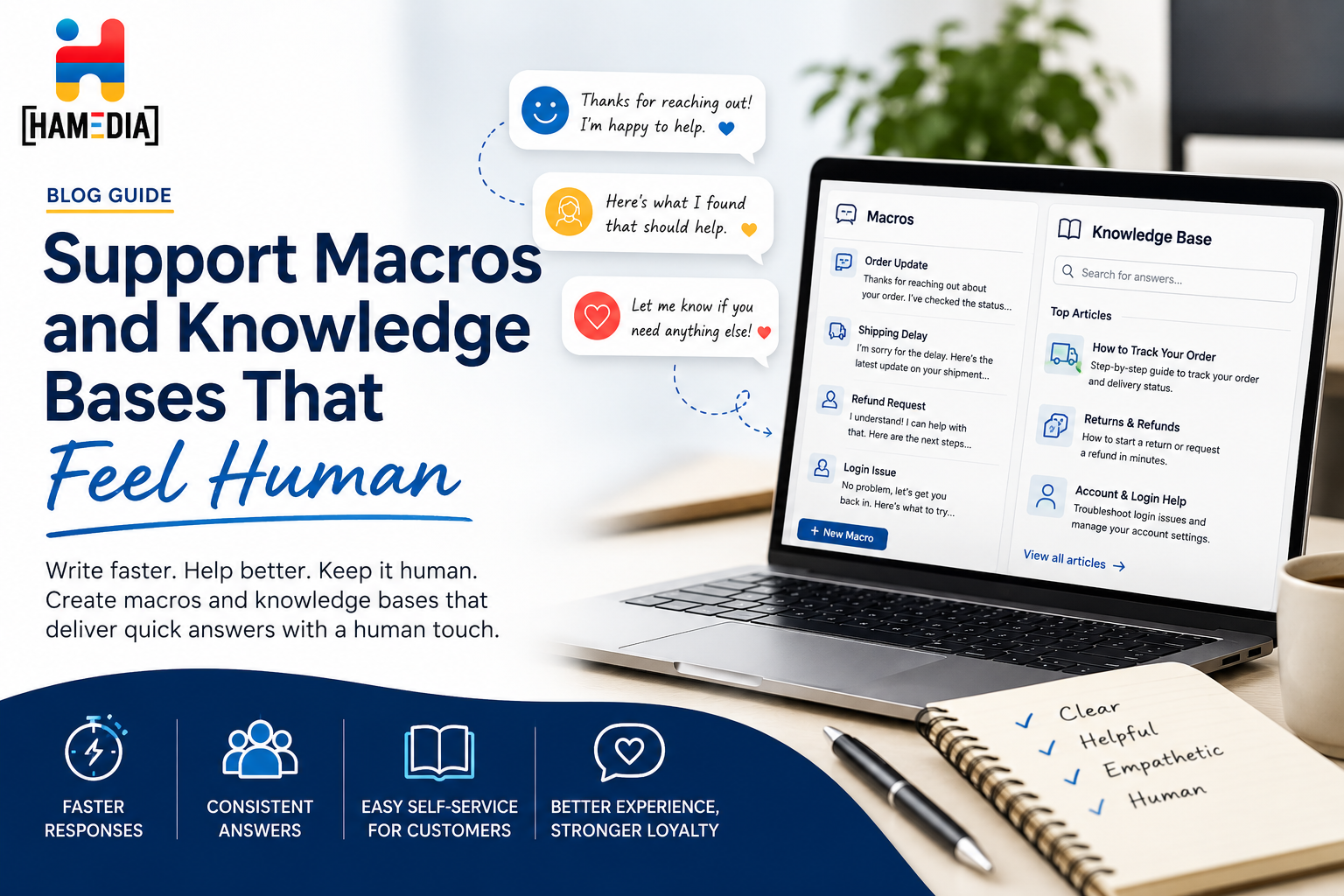
Support macros and knowledge bases work best when they help teams move faster without sounding cold or robotic. This blog explains how to write saved replies and support content in a way that feels clear, useful, and human, while still improving consistency, reducing repeat work, and making it easier for customers to find the help they need.
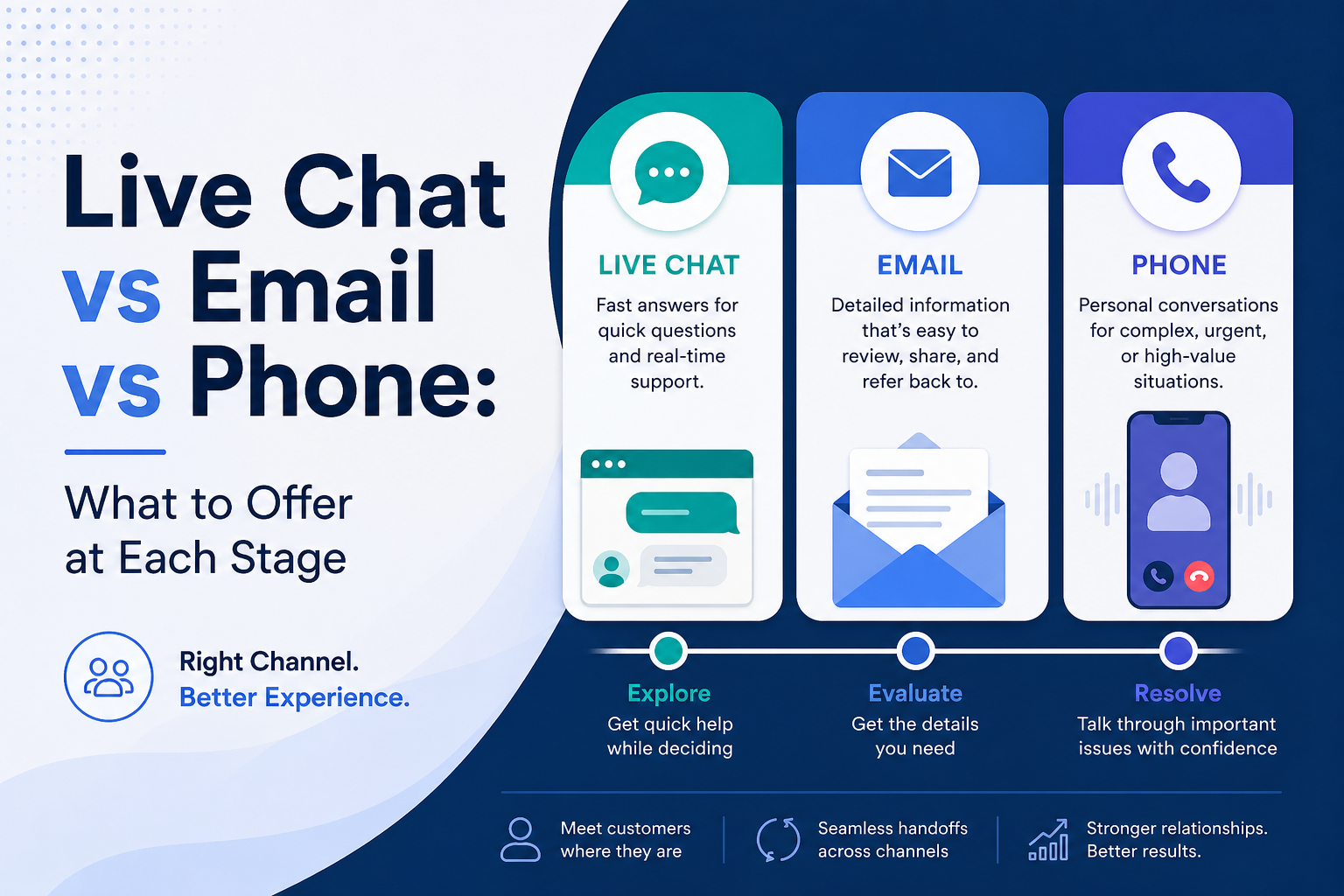
Choosing the right support channel is less about picking one winner and more about matching the customer’s needs at the right moment. This blog explains when to offer live chat, email, or phone at each stage of the customer journey so businesses can create faster responses, smoother support, and a better overall experience.
Outsourcing customer support can help startups and SMBs respond faster, stay consistent, and protect customer experience without draining internal bandwidth. This guide explains what to outsource first, how to set SLAs and metrics like first response time and CSAT, how to run QA and documentation, what security and privacy controls matter, and how to roll out an outsourced support team in 30 days with predictable results.