
Outsourcing customer support can help startups and SMBs respond faster, stay consistent, and protect customer experience without draining internal bandwidth. This guide explains what to outsource first, how to set SLAs and metrics like first response time and CSAT, how to run QA and documentation, what security and privacy controls matter, and how to roll out an outsourced support team in 30 days with predictable results.
Customer support is usually one of the first areas where startups and SMBs hit a wall. Volume grows, channels multiply, and founders or core team members end up spending their best hours answering the same questions repeatedly. Outsourcing can fix that, but only if you treat it like building a system, not “hiring someone to answer messages.”
The goal of support outsourcing is simple: protect customer experience while freeing your internal team to build, sell, and ship. A good outsourced support setup should reduce response times, keep quality consistent, and give you visibility through reporting.
If you are missing messages, replying late, or letting refunds and escalations pile up, you are already paying the cost of not having a support system. Outsourcing makes sense when the work is repetitive, the expectations are clear, and the business needs coverage that your current team cannot sustain.
External link: https://www.intercom.com/learning-center/customer-service-metrics
If you want a practical starting point, begin with an audit of your top ticket categories, busiest hours, and most common escalations. That becomes the blueprint for what to outsource first.
The safest first step is Tier 1 support. This is the high-volume, repeatable work like order status, password resets, billing questions, FAQ answers, basic troubleshooting, and routing tickets to the right place. It is easy to document and easy to QA.
Keep Tier 2 and Tier 3 support closer to your core team at first, especially anything that requires deep product knowledge, sensitive decisions, pricing exceptions, complex technical debugging, or legal and compliance judgment. You can outsource more later, but early clarity prevents bad escalations and customer frustration.
A strong model for startups is “outsourced Tier 1 + internal Tier 2.” Your outsourced team handles first response, triage, and common solutions, then escalates edge cases to your internal expert. That keeps response time fast without risking wrong answers on complex issues.
You do not need a fancy toolset, but you do need consistency. Most teams run some combination of a helpdesk, live chat, shared inbox, knowledge base, and reporting. The more channels you support, the more important a single “source of truth” becomes for tickets and customer history.
If you want outsourced support that plugs into your tools instead of forcing you to change your whole workflow, make sure your provider has experience with common platforms. For example, Zendesk, Intercom, Freshdesk, and CRMs like GoHighLevel show up often in small business stacks.
Outsourcing works when performance is measurable. The most useful metrics for startups and SMBs are first response time, resolution time, backlog size, CSAT, and escalation rate. These tell you whether customers are being helped quickly, whether problems are being solved, and whether quality is improving.
First response time is one of the fastest “trust builders” in support. Even if the final answer takes time, customers feel taken care of when they get a quick, clear first response.
CSAT is the simplest quality signal to add early because it is lightweight and easy to collect after a ticket is resolved. You do not need perfection, you need a steady trend and a process for fixing recurring issues.
An SLA should match customer expectations and your capacity. Many startups make the mistake of setting enterprise-level SLAs without the staffing or tooling to support them. It is better to set realistic targets, hit them consistently, then tighten over time.
A simple SLA framework to start with is channel-based. Live chat should be fastest, email can be slower, and social DMs should be routed into a ticketing system so nothing gets lost. Then define what counts as “urgent” and how urgent tickets are escalated.
Your outsourced team should not guess your tone, policies, or refund rules. Give them a small set of “non-negotiables” and a clear definition of done for every ticket. That includes brand voice, escalation rules, how to document the ticket, and how to close it properly.
The fastest way to create quality is to build a knowledge base and macros from real tickets. Every time the team solves a recurring issue, turn that response into a reusable template and a short SOP. Over a month or two, your support becomes more consistent and faster.
Support teams often touch sensitive data, even in small companies. That means outsourcing needs basic controls: least-privilege access, role-based permissions, audit logs where possible, and clear rules around what data can be copied into internal notes or AI tools.
If you operate in regulated industries or handle personal data for customers in certain regions, you may need a data processing agreement, vendor security review, or specific contractual terms. This is not legal advice, but it is worth running outsourcing contracts through counsel if you handle healthcare, finance, or sensitive identity data.
If a vendor claims strong security maturity, ask what standards they align with, how they handle access and offboarding, and how they manage incidents. Many companies reference ISO 27001 or SOC 2 concepts in vendor reviews, even if they are not fully certified.
AI can dramatically speed up support, but only when used as an assistant, not as an autopilot. The best use is drafting responses, summarizing long ticket threads, suggesting macros, routing tickets by intent, and highlighting sentiment or urgency. A human should still approve sensitive replies and edge cases.
If you use AI in support, set clear rules: what data is allowed in prompts, what must be redacted, and which ticket types require human-only handling. This keeps speed high without risking customer trust.
A good partner will ask about your customers, your ticket categories, your tone, and your escalation paths before they talk about staffing. If the conversation starts with “how many agents do you want,” you are likely getting labor, not a support system.
Ask how they train agents, how QA is handled, how reporting works, and what happens when volume spikes. Also ask how they document your policies so you are not dependent on one person’s memory.
If you want an example of support coverage that includes customer support as part of a broader VA model, this is a relevant service reference.
Most support outsourcing pricing falls into a few buckets: per-agent weekly or monthly, hourly blocks, per-ticket, or a blended retainer with performance targets. Startups usually do best with a simple per-agent model at first because it creates accountability and stable coverage.
If your volume is inconsistent, start with part-time coverage or a shared coverage schedule, then move to a dedicated agent as you learn your true ticket volume. The mistake is over-hiring early or under-staffing and letting customers wait too long.
Week one should focus on setup: tools access, tone guide, refund rules, escalation paths, and the top 20 ticket types. You want the team solving the most common problems first with clean documentation.
Week two is about stability: building macros, creating your knowledge base from real tickets, and tightening QA. This is also when you set your baseline metrics so you can see improvement clearly.
Week three is where you expand coverage: add channels like chat or social, introduce light automation for tagging and routing, and start weekly reporting that highlights trends and root causes.
Week four is optimization: reduce escalations by improving documentation, refine your SLAs by channel, and create a simple continuous improvement loop so support gets better every month, not just “done.”
The biggest mistake is outsourcing before your policies are clear. If your refund rules are inconsistent or your product answers change weekly, you will get inconsistent support no matter who you hire.
The second mistake is ignoring access control. Over-permissioned agents create unnecessary risk. Give only what is needed, and have a clean offboarding checklist.
The third mistake is not measuring. If you are not reviewing response times, backlog, CSAT, and escalation rate every week, you will not spot issues until customers complain publicly.
Customer support outsourcing is one of the fastest ways for startups and SMBs to protect customer experience while staying focused on growth. The key is to outsource with structure: clear Tier 1 ownership, documented policies, measurable SLAs, weekly reporting, and strong security hygiene. When those pieces are in place, outsourcing stops feeling risky and starts feeling like leverage.
Internal link: https://www.hamediaagency.com/contact
If you want help setting up support outsourcing with a clean onboarding process, clear reporting, and AI-assisted workflows that stay safe, this is a good place to start.
Valerie Vince Cruz is a thought leader in AI-enhanced outsourcing and business operations. With years of experience helping companies scale efficiently, they share insights on the latest trends and best practices in the industry.
Get in touch with our team and we'll help you find the right solution.
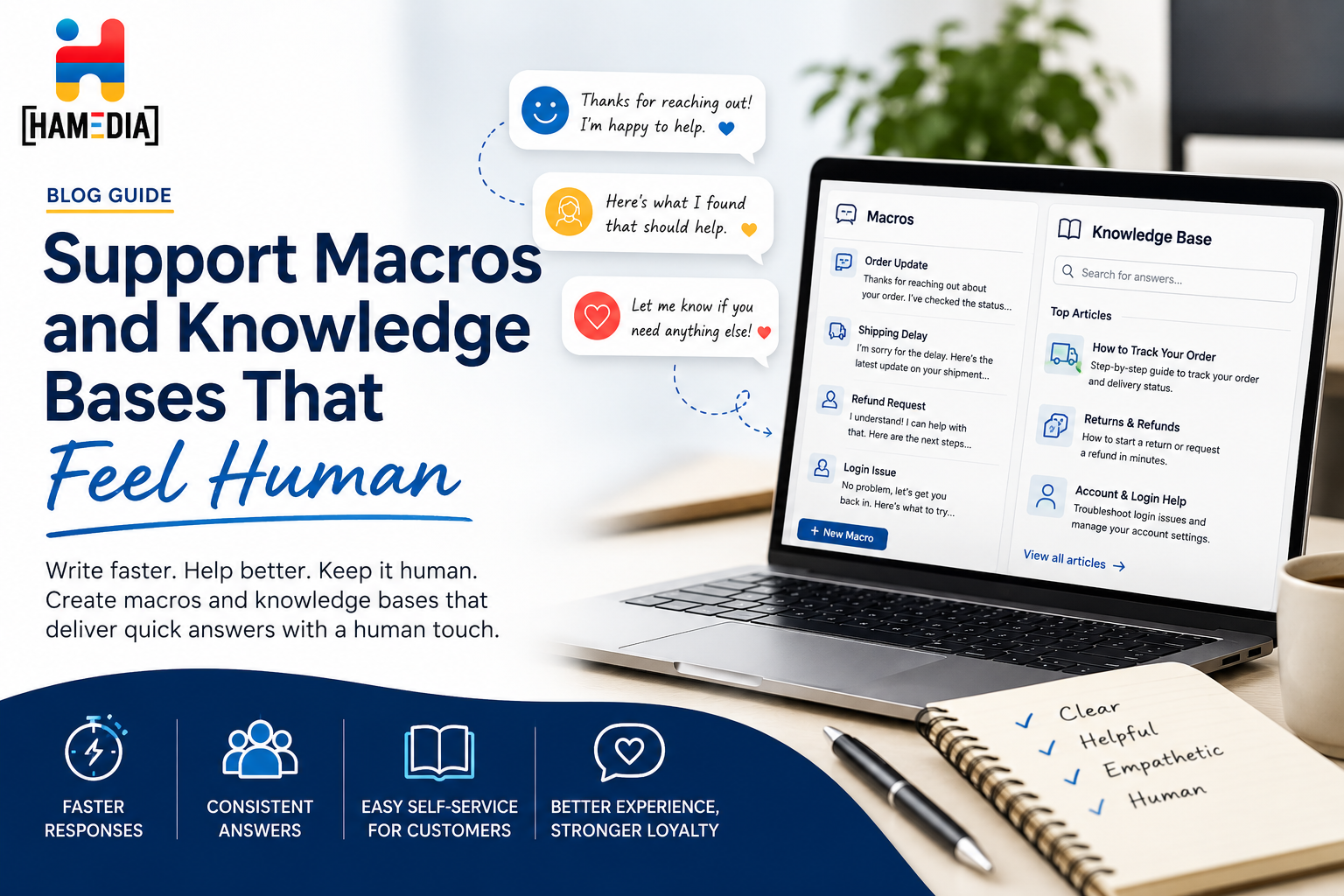
Support macros and knowledge bases work best when they help teams move faster without sounding cold or robotic. This blog explains how to write saved replies and support content in a way that feels clear, useful, and human, while still improving consistency, reducing repeat work, and making it easier for customers to find the help they need.
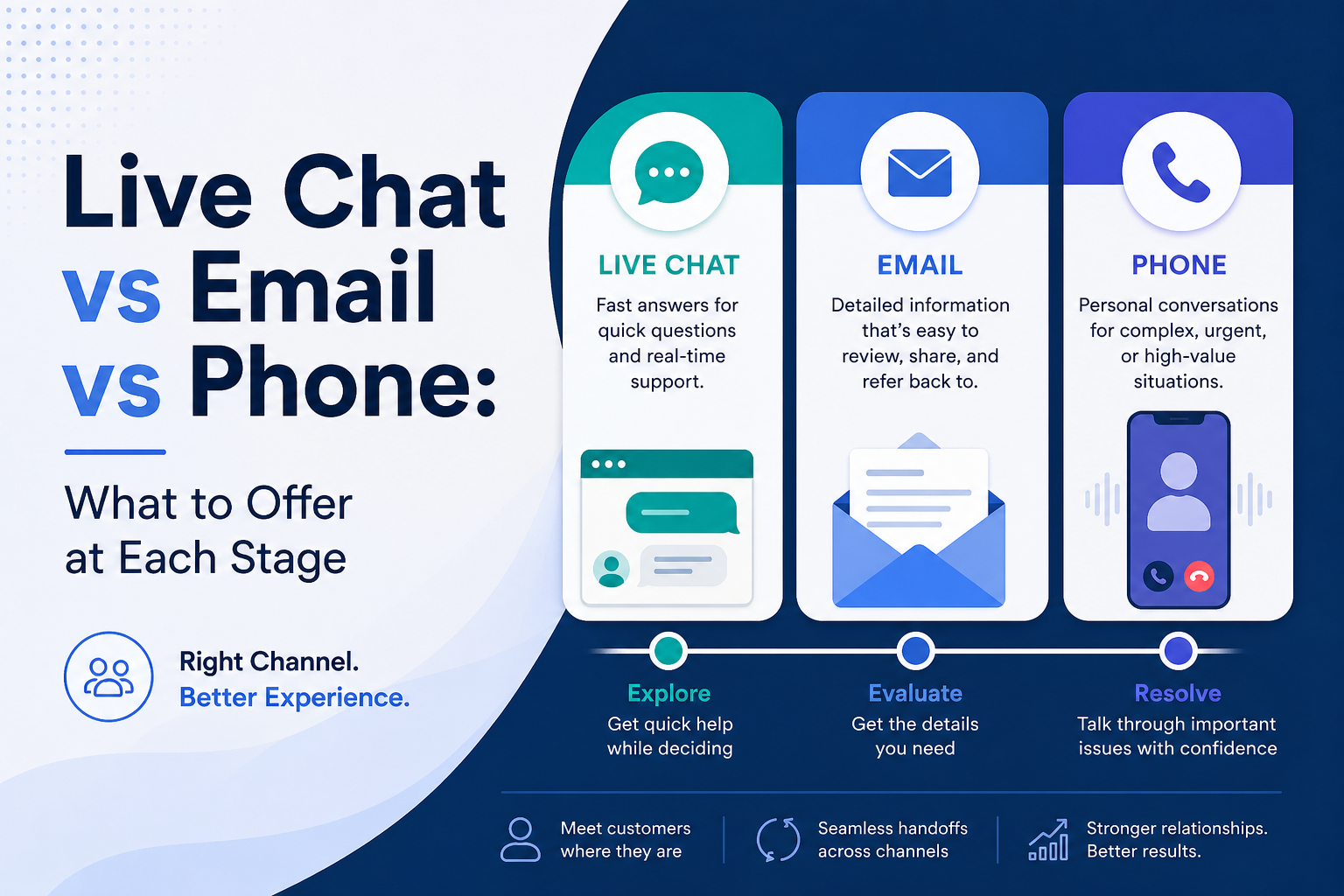
Choosing the right support channel is less about picking one winner and more about matching the customer’s needs at the right moment. This blog explains when to offer live chat, email, or phone at each stage of the customer journey so businesses can create faster responses, smoother support, and a better overall experience.

Support quality breaks when volume grows and answers become inconsistent. This guide shows how to build a lightweight support QA program in two weeks using a simple scorecard, smart sampling, fast feedback, and weekly coaching. You will also learn how to turn QA trends into better macros, knowledge base updates, and escalation rules so customer experience stays consistent as you scale.